Modern golf has become increasingly focused on convenience. Golf carts, GPS systems, mobile apps, rangefinders, and other technologies can make a round easier to navigate and help players access information quickly.
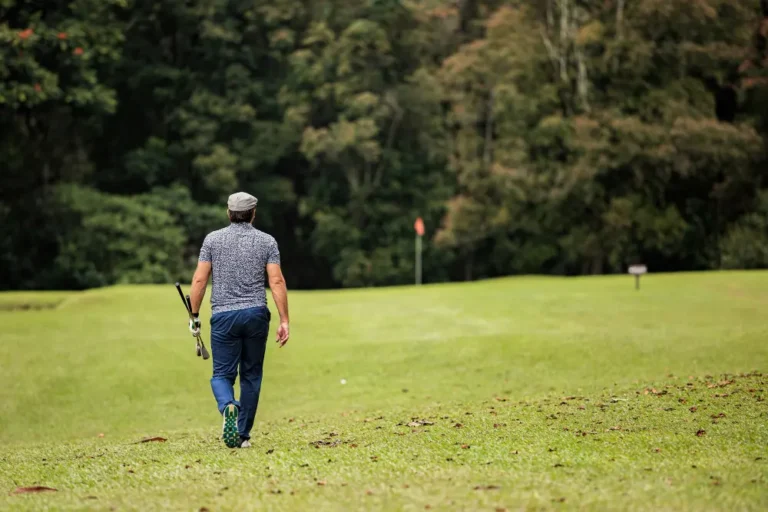
Despite these changes, walking the golf course continues to offer a different way to experience the game. Moving from one shot to the next on foot can influence how golfers observe the course, prepare for their next decision, manage their rhythm, and interact with the environment around them.
Walking will not be practical for every golfer or every course. Physical ability, weather, course design, time, and personal preference all play a role. However, where walking is comfortable and appropriate, it can remain a valuable part of the traditional golf experience.
Walking Creates a Different Pace of Play
Golf requires players to move repeatedly between periods of action and preparation.
Walking naturally creates time between shots. Instead of immediately travelling to the next ball in a cart, golfers have an opportunity to process the previous shot and begin thinking about what comes next.
This can create a more consistent rhythm throughout the round.
The additional time does not necessarily mean slower play. Golfers who walk efficiently, prepare while approaching their ball, and make decisions before it is their turn can still maintain an appropriate pace.
Golfers Can Observe More of the Course
Travelling through a course on foot can provide a closer view of its layout.
Golfers may notice slopes, changes in elevation, firmness of the ground, bunker positions, rough conditions, and areas of the fairway that are less obvious from a cart path.
These observations can provide useful information for future shots.
For example, seeing how the ground slopes near a green may help a golfer understand where an approach shot could finish or how a chip might react after landing.
Walking Can Support Better Course Management
Good golf is not only about producing technically strong shots. Players also need to decide where they want the ball to finish.
Walking toward the next shot provides time to consider distance, hazards, wind, lie, elevation, and possible targets.
Rather than making a quick decision after arriving at the ball, golfers can begin planning while moving through the course.
This does not guarantee better decisions, but it can encourage players to think about each hole as a sequence of shots rather than treating every swing independently.
The Walk Between Shots Can Help Players Reset
Every golfer eventually hits a disappointing shot.
One challenge is preventing frustration from affecting the next decision.
Walking provides a natural transition between shots. Players have time to move away from the previous result, assess the next situation, and redirect their attention.
This can be particularly useful after a missed putt, poor drive, or difficult hole.
Golfers still need to manage their reactions, but the physical movement between shots can provide a simple opportunity to reset before playing again.
Walking Can Help Golfers Develop a Consistent Routine
Consistency is an important part of golf.
Players often develop routines around club selection, practice swings, alignment, and preparation before hitting the ball.
Walking can extend that routine beyond the immediate moments before a shot.
A golfer can use the journey to the ball to evaluate the situation, decide on a general strategy, and then complete the final distance and lie assessment after arriving.
Following a similar process throughout the round can reduce rushed decisions.
Walking Provides Natural Physical Activity
A full round of golf involves travelling a considerable distance around the course.
When golfers walk, that movement becomes part of the playing experience.
The physical demands will vary depending on course length, elevation, weather, and the distance between greens and tees.
For golfers who are comfortable walking, maintaining a steady pace throughout the round can also encourage them to manage their energy more carefully.
However, players should consider their own physical abilities and the conditions rather than assuming walking is always the best option.
Course Design Becomes More Noticeable on Foot
Golf courses are designed around more than individual tee shots and greens.
Architects use contours, angles, hazards, elevation changes, vegetation, and visual features to influence how golfers move through each hole.
Walking can make these transitions easier to notice.
Players can see how one green connects to the next tee, how a fairway changes shape, and how different playing areas fit into the surrounding landscape.
This can provide a greater appreciation of why particular holes encourage certain strategies.
Walking Can Create a Stronger Connection With the Course
Part of the appeal of golf comes from spending time outdoors in a large natural environment.
Walking allows players to experience more of that environment rather than moving mainly between shots in a vehicle.
Golfers can observe changing ground conditions, vegetation, wildlife, weather, and different areas of the property throughout the round.
This connection does not directly determine performance, but it can influence how players experience and remember a golf course.
For some golfers, the journey around the course is an important part of the game rather than simply the distance between shots.
Playing Partners May Communicate Differently
Golf is both an individual sport and a social activity.
When players walk together, there are natural opportunities for conversation between shots.
These interactions can make recreational rounds more enjoyable and help players spend more time with their playing partners.
At the same time, golfers do not need to remain together throughout every part of the hole. Players can move toward their own balls when necessary to maintain pace.
The social value of walking depends on the group, but it remains one reason many golfers prefer travelling around the course on foot.
Technology Can Still Support Golfers Who Walk
Choosing to walk does not mean avoiding modern golf technology.
GPS watches, handheld rangefinders, mobile apps, digital scorecards, and lightweight push carts can all support golfers without changing the basic experience of walking the course.
A GPS device can provide useful distance information while a push cart can reduce the need to carry equipment for several hours.
Technology can therefore make walking more practical rather than replacing it.
The strongest approach is often to use digital tools when they provide useful information while continuing to observe the course directly.
Push Carts Can Make Walking More Accessible
Carrying a golf bag for an entire round may not be comfortable for every player.
Push carts provide an alternative by allowing golfers to walk without carrying the full weight of their equipment.
Modern designs can include storage areas, drink holders, umbrella attachments, and other practical features.
Electric models can reduce the physical effort required even further.
These options may allow more golfers to experience the benefits of walking while managing the physical demands of transporting their equipment.
Walking Is Not Suitable for Every Course
Some golf courses are significantly easier to walk than others.
Courses with long distances between holes, steep elevation changes, extreme temperatures, or layouts designed around cart transportation may make walking difficult.
Certain facilities may also have policies that require carts during specific periods or for particular tee times.
Golfers should consider the layout and local conditions before deciding how they will travel around the course.
The goal should be to choose an option that supports comfortable, safe, and efficient play.
Golf Carts Still Have an Important Role
Walking and cart use do not need to be treated as competing approaches.
Golf carts make the game accessible to players who may find walking difficult and can be particularly valuable on large or demanding courses.
They can also be useful during extreme weather or when course design involves significant travel between holes.
The appropriate choice depends on the golfer and the situation.
For some rounds, walking may provide the preferred experience. For others, using a cart may make the game more practical and enjoyable.
Golfers Can Learn More About Their Own Game While Walking
Walking can provide additional time to reflect on patterns during a round.
Players may begin to notice where they regularly miss shots, which areas of the course create difficulty, and when poor decisions lead to unnecessary problems.
This information can be useful because improvement does not always require changing the golf swing.
Better target selection, club choice, and risk management can sometimes produce more consistent results without major technical adjustments.
Walking gives golfers time to consider these patterns as the round develops.
The Role of Walking in the Future of Golf
Golf will continue to adopt technology that makes the game more convenient, measurable, and accessible.
GPS systems, electric carts, digital course guides, smart devices, and other technologies will remain important parts of the modern golf experience.
Walking, however, can continue to provide something different.
It gives golfers time between shots, encourages closer observation of the course, supports thoughtful decision-making, and allows players to experience the layout at a natural pace.
Not every golfer needs to walk every round, and modern transportation has an important role in making golf accessible to more people.
The future of golf does not require choosing between tradition and convenience. Golfers can use modern technology while preserving elements of the game that continue to provide value.
For players who are able and comfortable doing so, walking the course remains one of the simplest ways to experience golf as a complete journey from the first tee to the final green.