
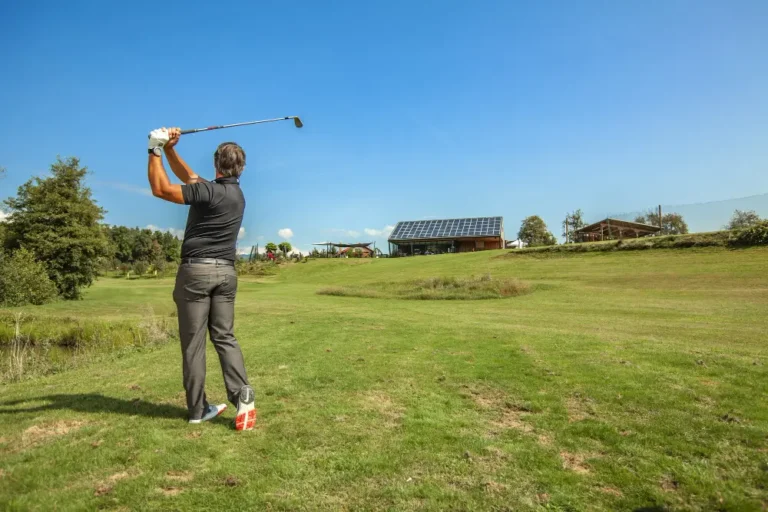
A golf course is more than a collection of fairways, bunkers, and greens. Every hole is designed to present golfers with choices. The position of hazards, width of landing areas, angle of the green, changes in elevation, and even the shape of the fairway can influence how a player approaches the next shot.
Good golf course architecture does not always tell golfers exactly where to play. Instead, it can present several possible routes, each offering a different balance between risk and reward. A more aggressive line may create an easier approach, while a safer route may leave a longer or more difficult next shot.
Understanding these design features can help golfers make better decisions. Rather than automatically reaching for the longest club or aiming directly at the flag, players can begin thinking about where each shot should finish and how that position affects the rest of the hole.
Tee Position Can Change the Entire Strategy of a Hole
Decision-making begins before the golfer hits the first shot.
Different tee positions can change the angle, distance, and visual appearance of a hole. Moving the tee only a relatively small distance may bring a bunker into play, change the preferred side of the fairway, or alter how a dogleg should be approached.
This is one reason golfers should assess each hole from the tee rather than relying entirely on how they played it previously.
The best strategy from one set of tees may not be the best strategy from another.
Fairway Width Can Influence Risk and Reward
Wide fairways may appear simple, but their design can still encourage golfers to choose particular areas.
One side of the fairway may provide a better angle into the green, while another side offers more space but creates a more difficult approach.
Narrower landing areas can place greater importance on accuracy.
Golfers then need to decide whether the potential advantage of additional distance is worth the risk of finding rough, bunkers, trees, or another difficult position.
The widest part of the fairway is not always the position that provides the easiest next shot.
Bunkers Can Influence Shots Without Catching the Ball
Bunkers affect strategy even when golfers never enter them.
A well-positioned fairway bunker can influence club selection from the tee. Players may choose to stay short of it, attempt to carry it, or aim toward another section of the fairway.
Greenside bunkers can have a similar effect on approach shots.
A flag positioned close to a bunker may encourage aggressive players to attack the target, while a safer strategy could involve aiming toward the centre or opposite side of the green.
The presence of the hazard changes the decision before it changes the result.
Doglegs Encourage Golfers to Think About Position
Dogleg holes demonstrate why distance alone does not determine good strategy.
A golfer who hits directly toward the corner may shorten the remaining distance, but that line may also bring bunkers, trees, rough, or other hazards into play.
Playing toward the wider side of the fairway can reduce risk but may leave a longer approach.
The shape of the hole therefore asks the golfer to decide how much of the corner to challenge.
Players who understand their normal shot shape and reliable driving distance can make this decision more realistically.
Angles Can Be More Important Than Distance
The shortest route from tee to green is not always the easiest route.
Golf course architects can use angles to reward players who place the ball on a particular side of the fairway.
A golfer positioned correctly may have an open view of the green with fewer hazards to carry. Another player may be slightly closer but face a bunker, narrow entrance, or difficult flag position.
This makes positioning an important part of course management.
Golfers can benefit from considering not only how far they want to hit a shot, but also where they want to play the following one from.
Hazards Create Decisions About How Much Risk to Accept
Water, bunkers, deep rough, trees, and other hazards can create clear strategic choices.
A golfer may be able to carry a hazard and gain a significant advantage, but the penalty for an unsuccessful shot may also be considerable.
The correct decision depends on more than the design of the hole.
A player’s ability, confidence, current conditions, and normal shot pattern should all influence whether an aggressive option is appropriate.
Course architecture creates the decision, but golfers still need to judge whether the potential reward justifies the risk.
Green Design Influences Approach Shots
Reaching the green does not always mean the golfer has found a good position.
Large greens can contain slopes, tiers, ridges, and sections that make putting from one area to another difficult.
The location of the flag can therefore change the preferred approach strategy.
When the hole is positioned near the edge of the green or close to a hazard, aiming directly at the flag may introduce unnecessary risk.
In other situations, the shape of the green may reward a shot played toward a particular side because the natural contours can move the ball toward the target.
Green Entrances Can Favour Different Types of Shots
Some greens have wide, open entrances that allow golfers to run the ball onto the putting surface.
Others are protected by bunkers, rough, water, or elevated fronts that require the ball to arrive through the air.
These differences influence both club selection and shot choice.
A golfer who normally prefers lower approach shots may need to adapt when the architecture requires a higher trajectory.
Course conditions also matter. Firm ground can make an open entrance particularly useful, while softer conditions may allow golfers to attack the green more directly.
Elevation Changes Can Alter Visual Perception
Uphill and downhill holes can make distance judgement more complicated.
An elevated green may hide parts of the putting surface and make it difficult to see where the ball should land.
Downhill shots can provide a wider view but may make hazards appear closer or farther away than they actually are.
Elevation can also influence club selection and ball flight.
Golfers who rely only on the visual appearance of a shot may misjudge the required distance, so combining observation with reliable distance information can improve decision-making.
Slopes Can Direct the Ball Toward or Away From Trouble
The ground itself is an important part of golf course architecture.
Fairways are rarely completely flat, and slopes can influence where a ball finishes after landing.
A shot that appears to be heading toward the centre of the fairway may move toward rough or a bunker once it reaches the ground.
The same principle applies around greens.
Golfers who recognise slopes can sometimes use them to their advantage by allowing the contours to move the ball toward the target.
Understanding the ground can therefore be just as important as understanding the distance through the air.
Visual Design Can Influence Golfer Confidence
Golf course architecture can affect what golfers believe they are seeing.
Bunkers, trees, water, changes in mowing patterns, and the orientation of tee boxes can make landing areas appear narrower or more intimidating than they actually are.
This can influence confidence and target selection before the golfer even begins the swing.
Players who become overly focused on hazards may start aiming away from their intended strategy.
Using accurate distance information and selecting a clear target can help golfers respond to the actual challenge rather than only the visual impression created by the hole.
Course Design Can Reward Different Playing Styles
Not every golfer approaches a course in the same way.
Long hitters may be able to carry hazards that shorter players need to avoid. Accurate players may prefer conservative targets that keep the ball in position, while aggressive golfers may look for opportunities to shorten holes.
Good course architecture can provide options for different abilities and playing styles.
A strategic hole does not necessarily require every golfer to play the same shot.
Instead, it can allow players to choose a route based on their strengths and the level of risk they are willing to accept.
Weather Can Change the Intended Strategy
Golf course architecture remains the same, but the way golfers interact with it can change considerably with the weather.
Strong wind may make a bunker that is normally easy to carry much more difficult to clear.
Firm fairways can create additional roll and bring distant hazards into play, while wet conditions may reduce distance and make the course effectively longer.
Wind direction can also change which side of a fairway provides the most useful angle.
For this reason, golfers need to combine their understanding of course design with the conditions they face on that particular day.
Technology Can Help Golfers Understand Course Design
Modern GPS devices, rangefinders, digital course maps, and golf apps can provide information that is difficult to judge visually.
Golfers can identify distances to hazards, measure the width of landing areas, and understand how far they need to hit a shot to reach or avoid certain features.
Some digital maps also provide an overhead view of the entire hole.
This can help golfers recognise strategic options that may not be obvious from ground level.
Technology provides useful information, but players still need to decide how that information applies to their own abilities.
Playing the Same Course Can Reveal New Strategic Details
Golfers often discover more about a course each time they play it.
A strategy that appeared effective during one round may create difficulties when the flag position, wind direction, ground conditions, or tee location changes.
Repeated rounds can reveal where certain slopes lead, which side of a fairway provides better angles, and which hazards are more influential than they first appear.
This knowledge can gradually change the way a golfer approaches individual holes.
Instead of reacting only to the next shot, players can begin planning several shots ahead.
Course Architecture Encourages Better Decision-Making
One of the most interesting features of golf course architecture is that it can challenge players without requiring every hole to be extremely long or physically difficult.
Strategic positioning of fairways, hazards, greens, slopes, and landing areas can create decisions for golfers of different abilities.
The challenge is not simply whether a player can hit a particular shot. It is also whether that shot is the right choice for the situation.
Golfers who begin to recognise these architectural features may develop a more thoughtful approach to course management.
Rather than automatically choosing the longest club or aiming directly at every flag, they can consider angles, landing areas, hazards, and the position they want for the next shot.
Golf course architecture ultimately creates a conversation between the player and the course. The design presents options, and the golfer decides how to respond.
Learning to recognise those options can make each round more strategic and help players understand that better golf often begins with making better decisions before the swing is made.